Assessment Structure and Scope
About the Assessments
The GRESB Infrastructure Assessments are the global standard for sustainability benchmarking and reporting for institutional investors, fund managers, infrastructure companies, and asset managers operating in the infrastructure sector. The methodology is consistent across different regions, investment vehicles, and asset types, aligning with international reporting frameworks such as the Task Force on Climate-Related Financial Disclosures (TCFD), the Global Reporting Initiative (GRI), and the Principles for Responsible Investment (PRI).
There are three complementary GRESB Infrastructure Assessments:
Infrastructure Fund Assessment
Infrastructure Asset Assessment
Infrastructure Development Asset Assessment
GRESB also offers two SFDR Infrastructure Assessments (SFDR Asset & SFDR Fund) to support infrastructure participants in meeting their SFDR disclosure requirements.
All assessments cover the full breadth of infrastructure sectors, including but not limited to data infrastructure, energy and water resources, environmental services, network utilities, power generation except renewables (x‑renewables), renewable power, social infrastructure, and transport.
Which assessment should I complete?
Listed infrastructure companies and private infrastructure asset operators.
Management + Performance + NZIF Module
Greenfield/pre-operational infrastructure assets or infrastructure companies that invest in greenfield/pre-operational assets
Development
The Infrastructure Assessment output depends on a participant's component selection, which is entirely under their discretion.
Please refer to the "Who should participate" sections below for details on the scope of each assessment and its associated component(s).
Fund Assessment
What is the Fund Assessment, and how is it structured?
The Infrastructure Fund Assessment consists of only one Management Component, which includes 23 indicators across six aspects:
Leadership
Policies
Targets
Reporting
Risk Management
Stakeholder Engagement
Funds' underlying assets (portfolio companies) complete the Performance and/or Development Component(s) as part of the Infrastructure Asset or Development Asset Assessments.
The results of the underlying assets may contribute to the fund's overall GRESB Score.
Performance Component
Funds do not complete a Performance Component. Instead, the underlying assets of the fund complete it.
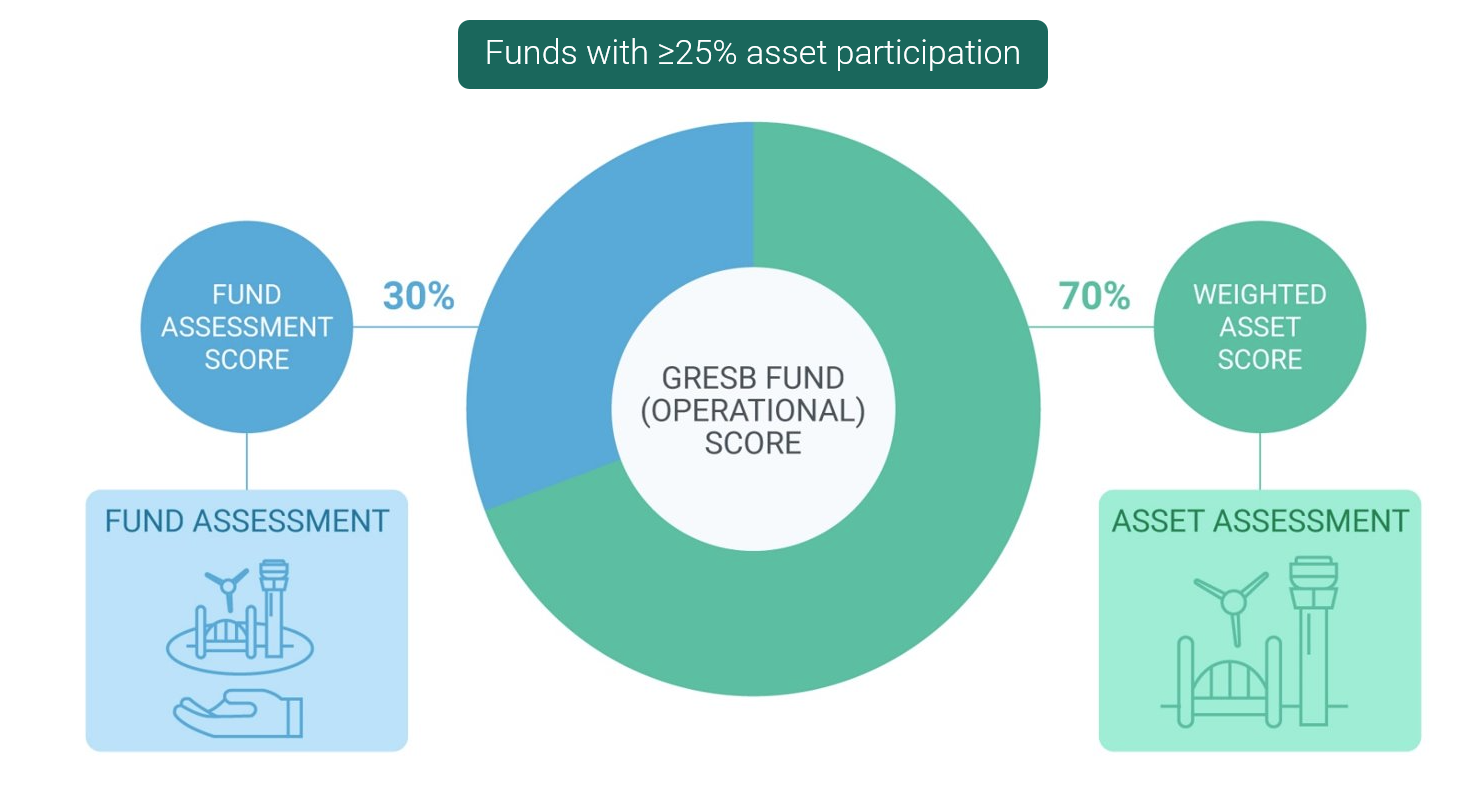
To earn a Fund Performance Score, at least 25% of the fund's underlying assets (based on equity invested) must participate in a GRESB Infrastructure Assessment. Within the 25%, at least one asset must complete the Asset Assessment and be connected to the fund on the GRESB Portal.
The fund's management and performance scores join together to create the premier measurement of sustainability performance: the GRESB Score — Infrastructure Fund.

Development Component
Funds do not complete a Development Component. Instead, the underlying development assets of the fund complete it.
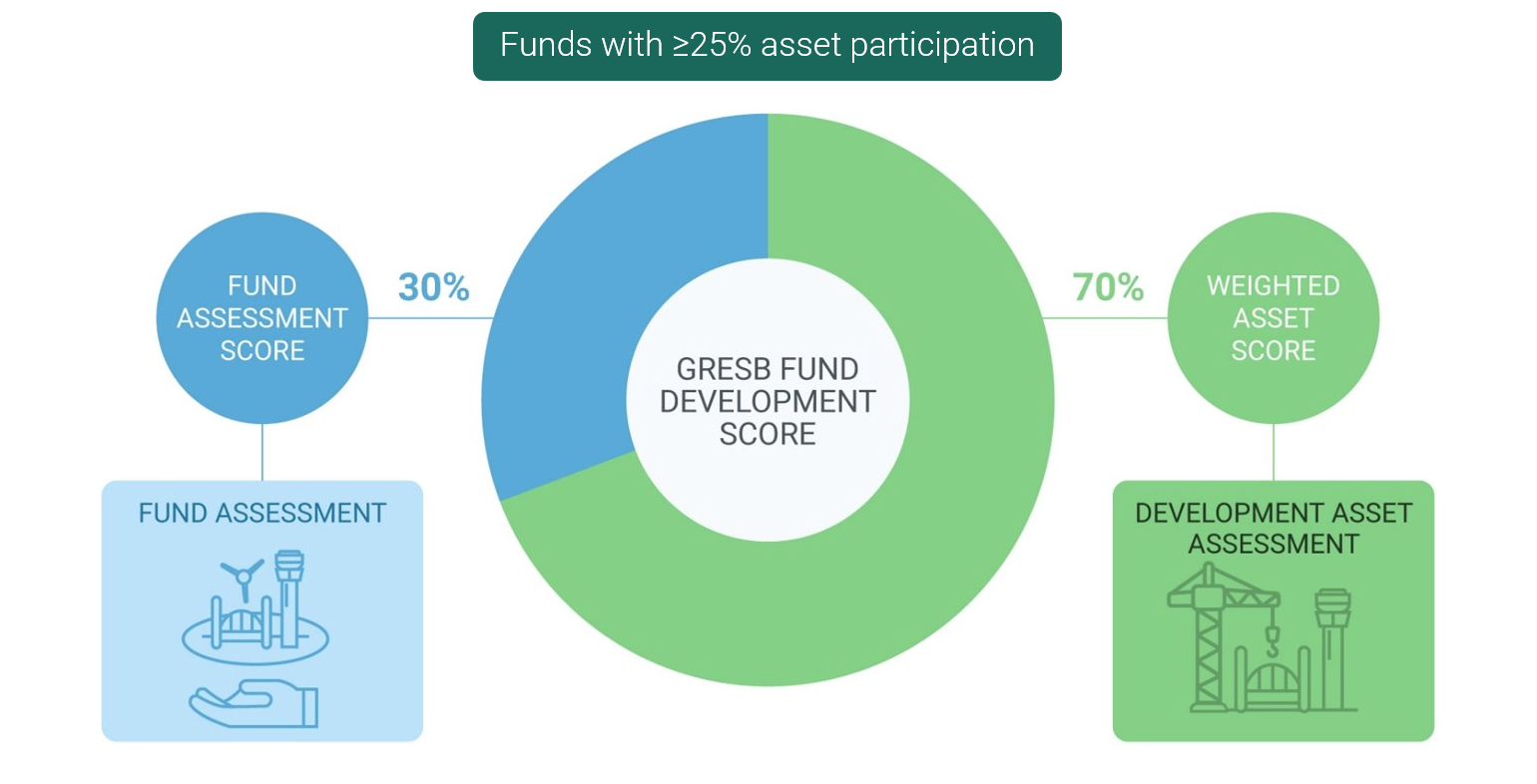
To earn a Fund Development Score, at least 25% of the fund's underlying assets (based on equity invested) must participate in a GRESB Infrastructure Assessment. Within the 25%, at least one asset must complete the Development Asset Assessment and be connected to the fund on the GRESB Portal.
The fund's management and performance scores join together to create the premier measurement of sustainability performance: the GRESB Score — Infrastructure Fund.

Who should participate?
Infrastructure funds, portfolios, and companies can participate in the Fund Assessment. Common examples of infrastructure funds include:
A sector-focused fund with investments in renewable energy
A geographic-focused fund with investments in a specific region, such as North America or Oceania
A segregated account that is globally diversified, offering exposure to several sectors
How are E, S, and G represented in the assessment?
Each indicator is allocated to one of the three sustainability dimensions (E‑ environmental; S‑ social; G‑ governance):
E – indicators related to actions and efficiency measures undertaken to monitor and decrease the environmental footprint of the asset;
S – indicators related to the entity’s relationship with and impact on its stakeholders and the direct social impact of its activities
G – indicators related to the governance of sustainability, policies and procedures, and approach to sustainability at the entity or organization level.
4%
18%
78%
Last updated
Was this helpful?