Assessment Portal Guide
Get Started
Register and Log In
If you don’t have a GRESB account already, you can sign up to create one at https://portal.gresb.com/user/sign_up.
If this is the first year the entity will complete a Public Disclosure Assessment:
Please make sure to sign-up with the email address sent the “Review your 2026 Public Disclosure data email."
Registering with this email address will automatically link your user account to an Assessment with pre-filled Public Disclosure data.
If the entity has previously submitted a Public Disclosure Assessment, you can register with any email address. You can access the entity's Public Disclosure assessment by following the steps described in Add and Manage Users
If you are unsure whether GRESB has collected and pre-filled 2026 Public Disclosure data for your organization, please visit GRESB Helpdesk.
In the registration form, select that you are interested in the GRESB Real Estate Assessment and enter your contact information.
Once you’ve created a user account, you can log in to the GRESB Portal.
Create a New Reporting Entity
Anyone with a user account can set up a reporting entity in the GRESB Portal. A reporting entity is any entity – portfolio, fund or infrastructure asset – that will complete a GRESB Assessment.
The first step in creating a new entity is to log into the GRESB Portal and navigate to the Assessment Portal, as shown in the screenshot below.
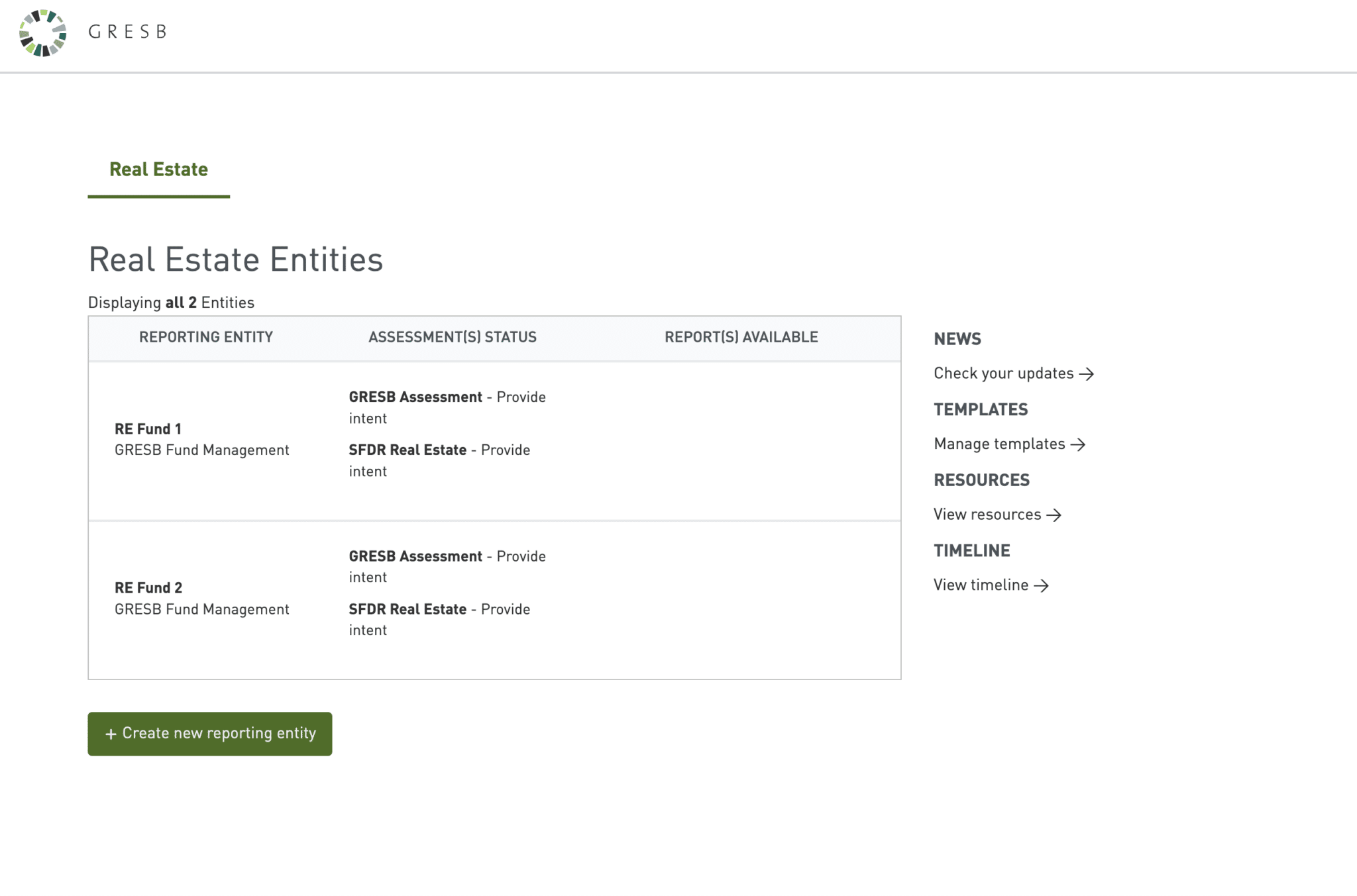
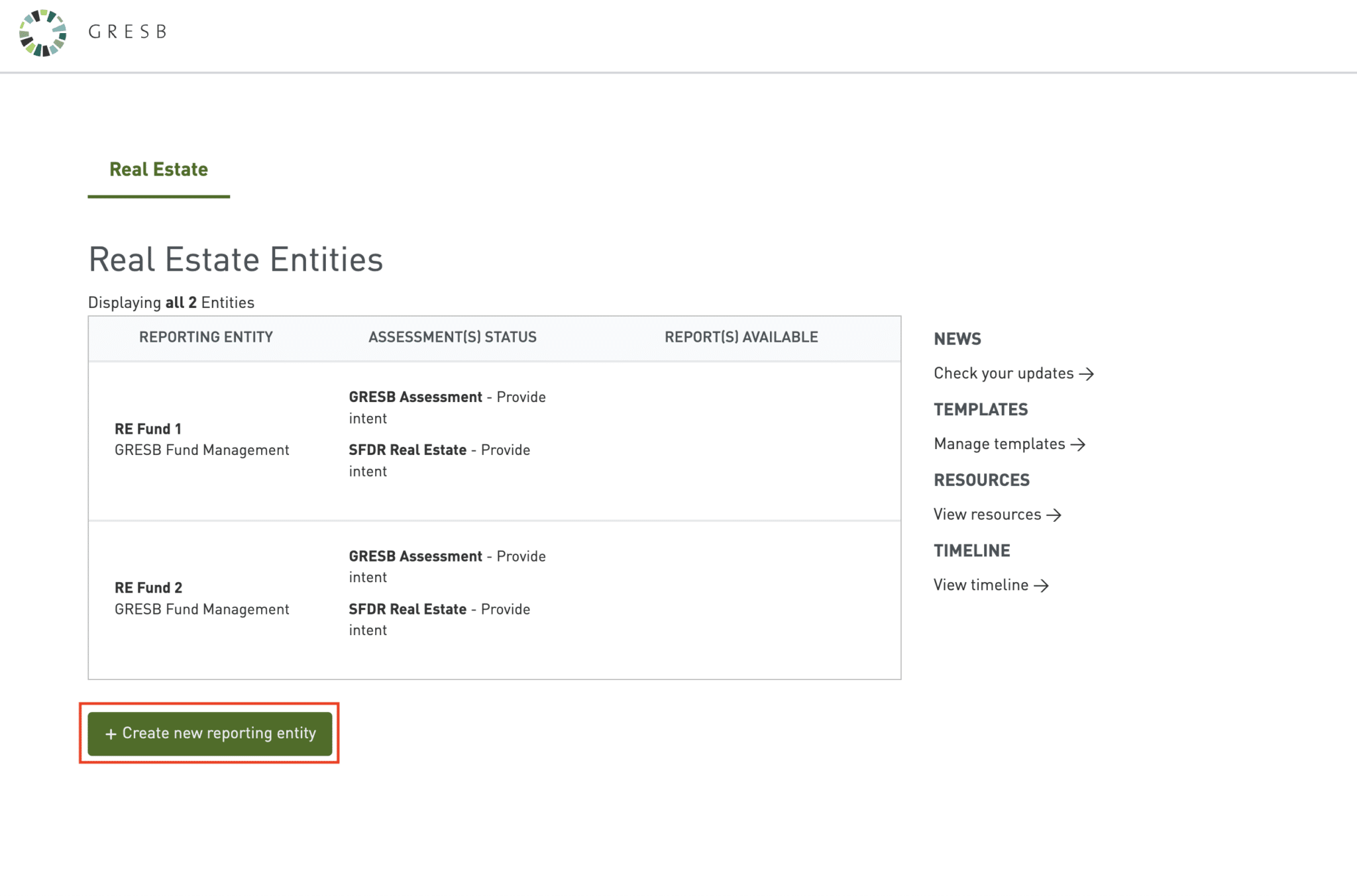
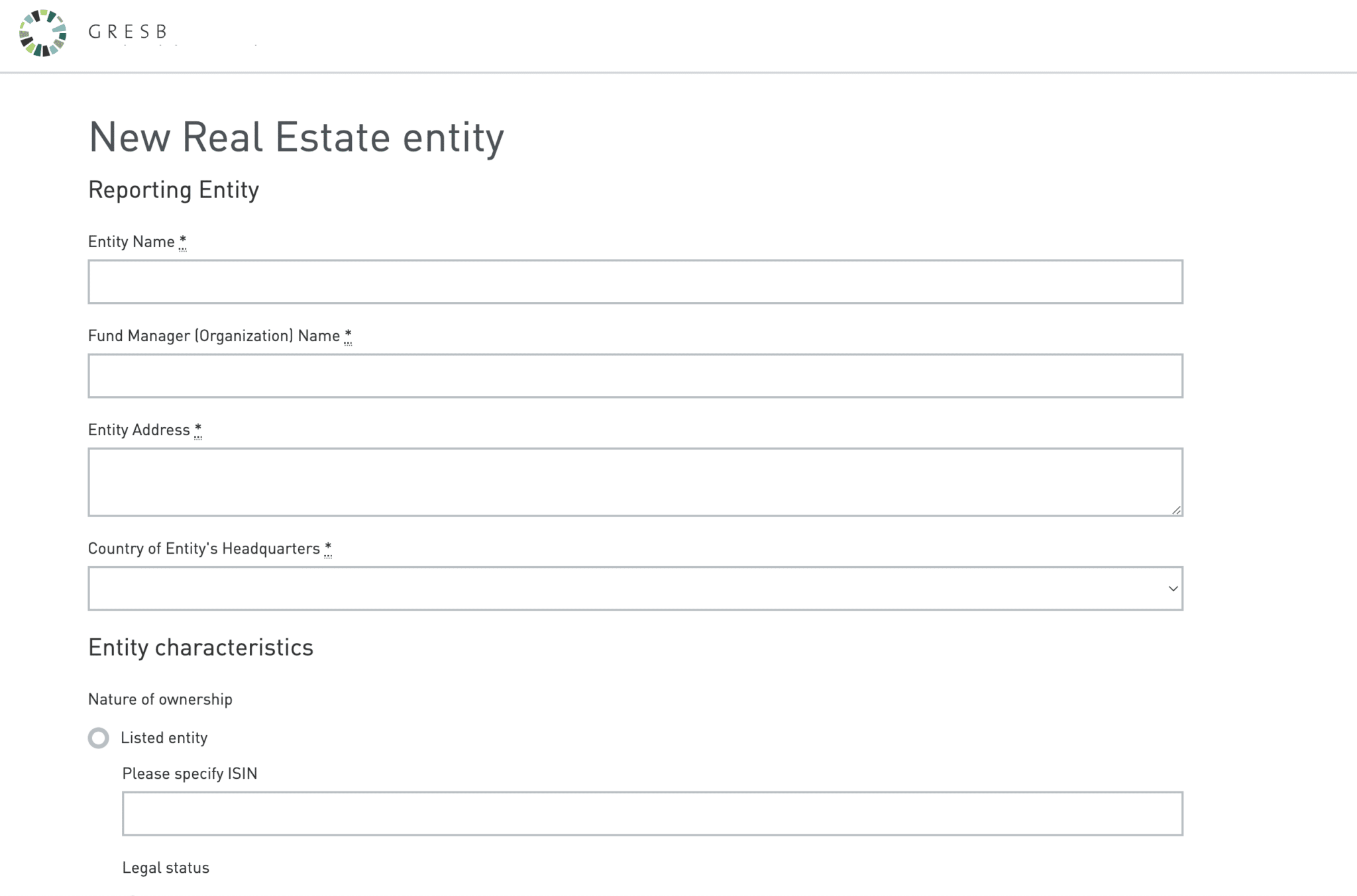
Once logged in, you can create a new real estate entity by clicking on the button “Create new reporting entity” as indicated below.

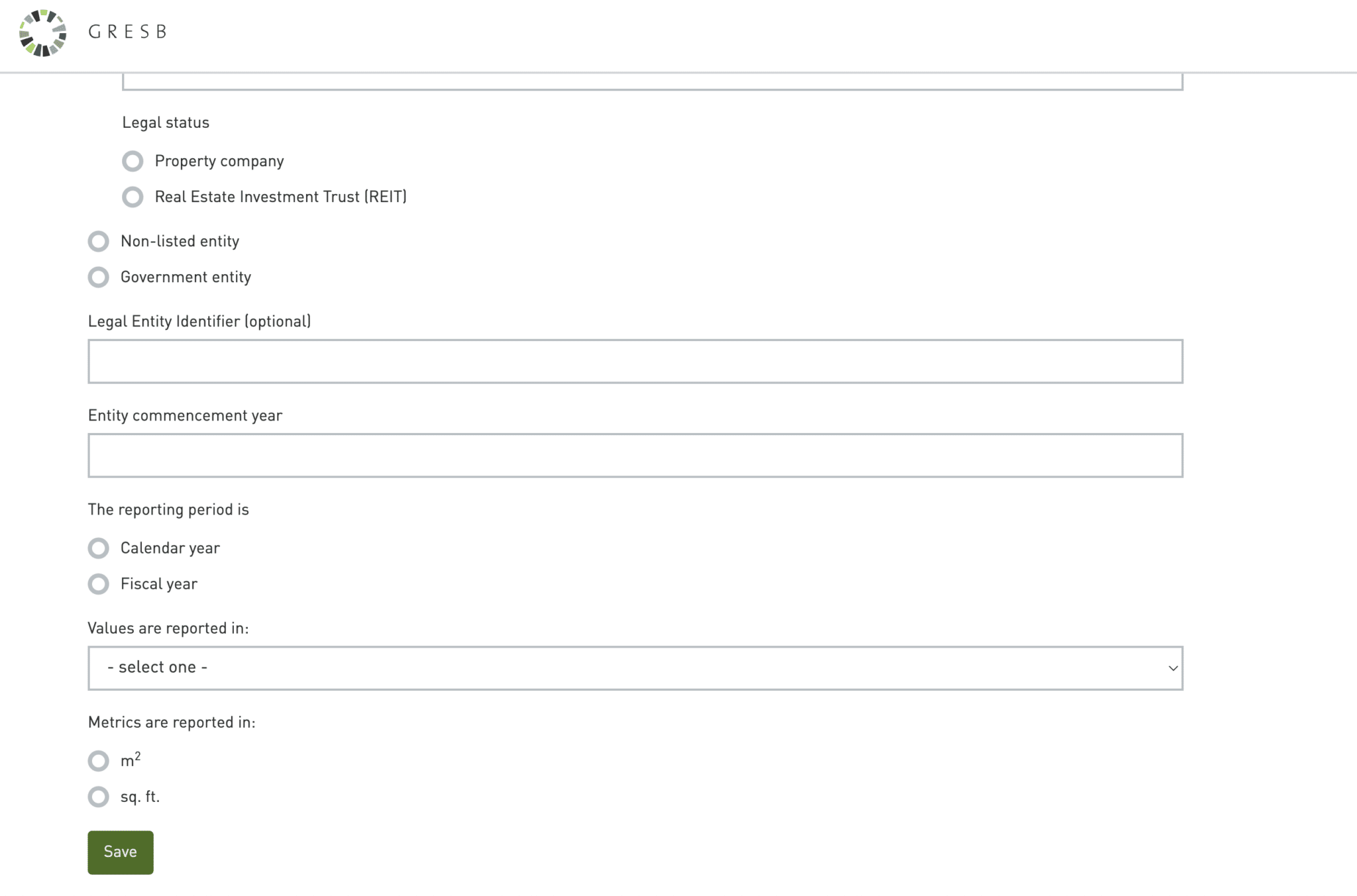
You will then be asked to complete some information about the fund.


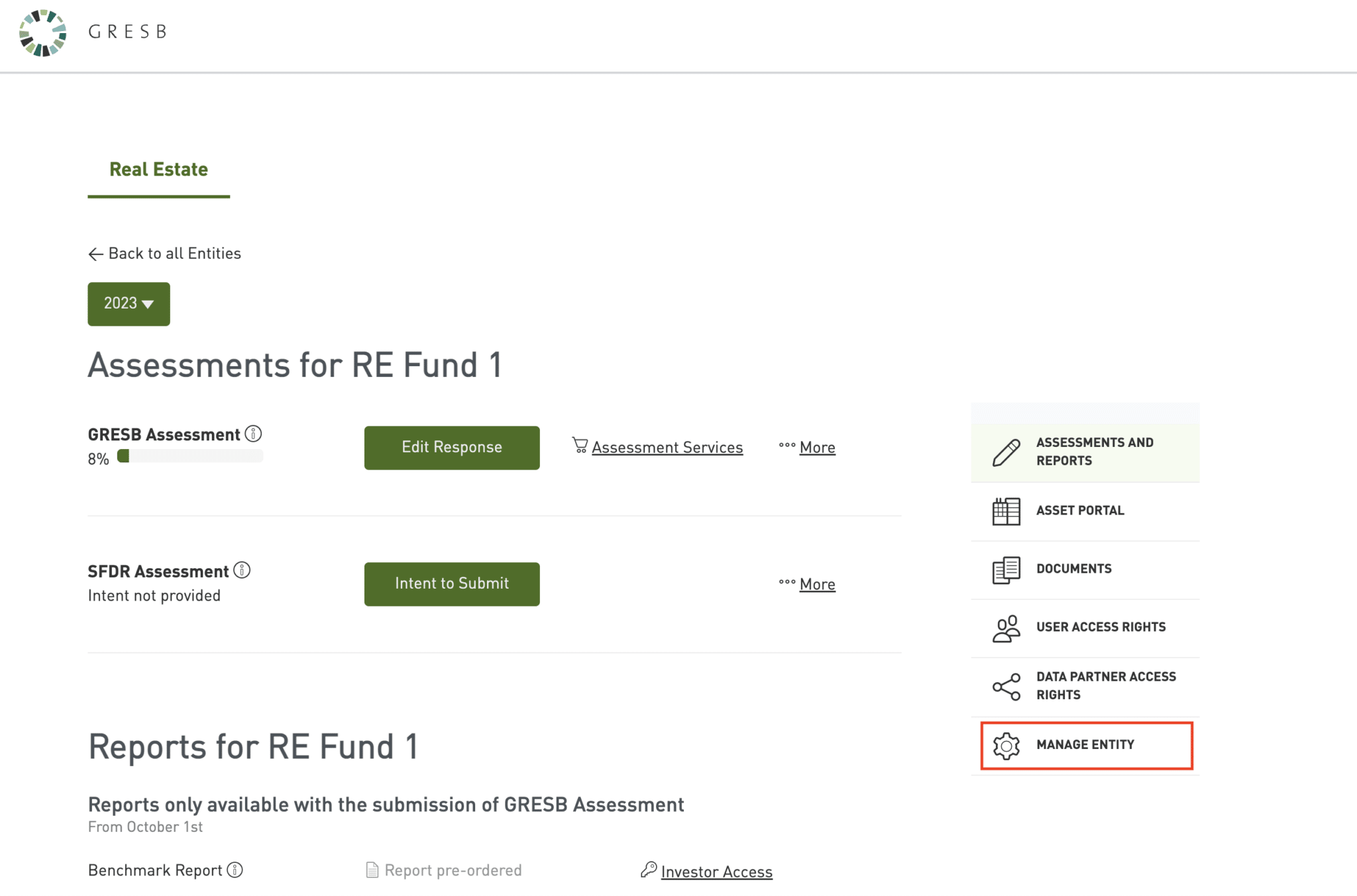
If you need to make any changes to the entity characteristics, you can do so by going to the assessment overview page for the entity and clicking on “Manage entity” in the menu on the right.

Managing Assessments
Intent to Submit
Once you’ve created the entity, you can start an assessment by clicking on the one that you’d like to start.
You will first be asked to provide your intent to submit the assessment to GRESB.
Select ‘Yes’ if you fully intend to submit. Otherwise, select ‘Maybe’ or ‘No.’
It is possible to edit the information later.
Note that this text box with clarification is shared with GRESB Investor Members.
Add and Manage Users
You can add as many users as you need in the GRESB Portal.
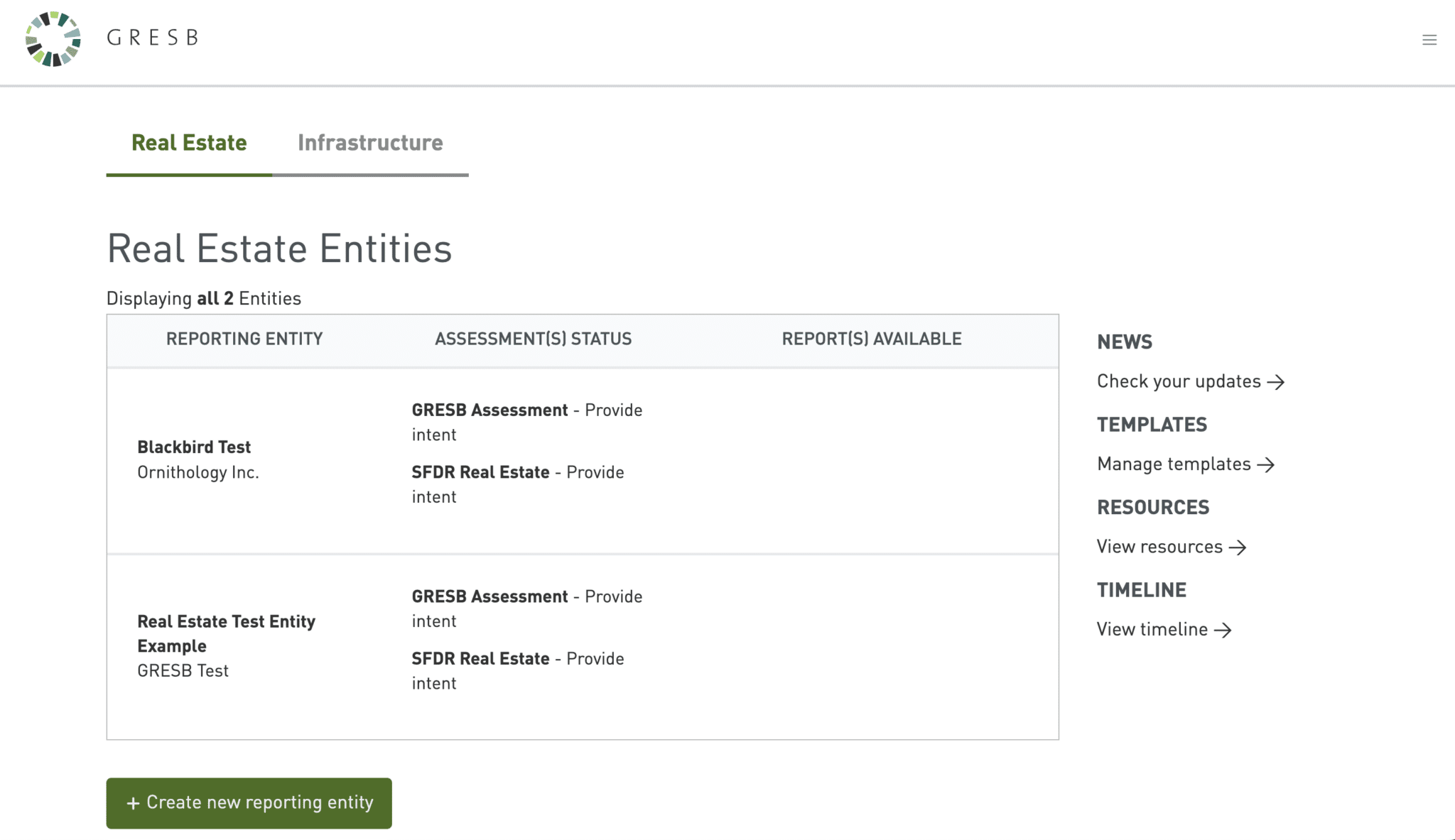
When you log into the GRESB Portal, you’ll see the Assessment Portal overview, as in the example screenshot below.

Next, click on the entity for which you want to change the users. You will see the view below.
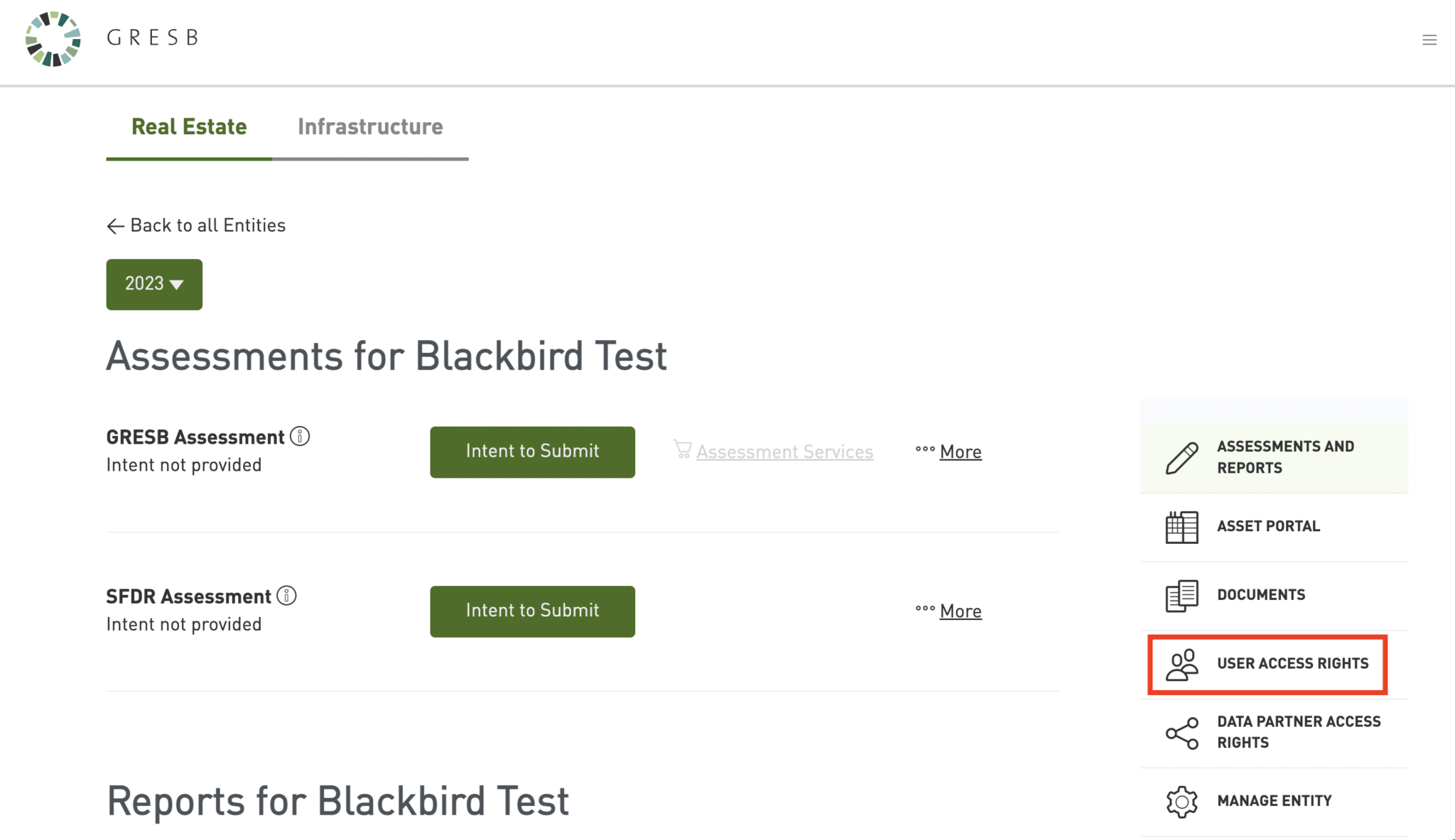
Click on “User Access Rights” in the menu on the right side to view the users with access to the entity. The screenshot outlines this in red.

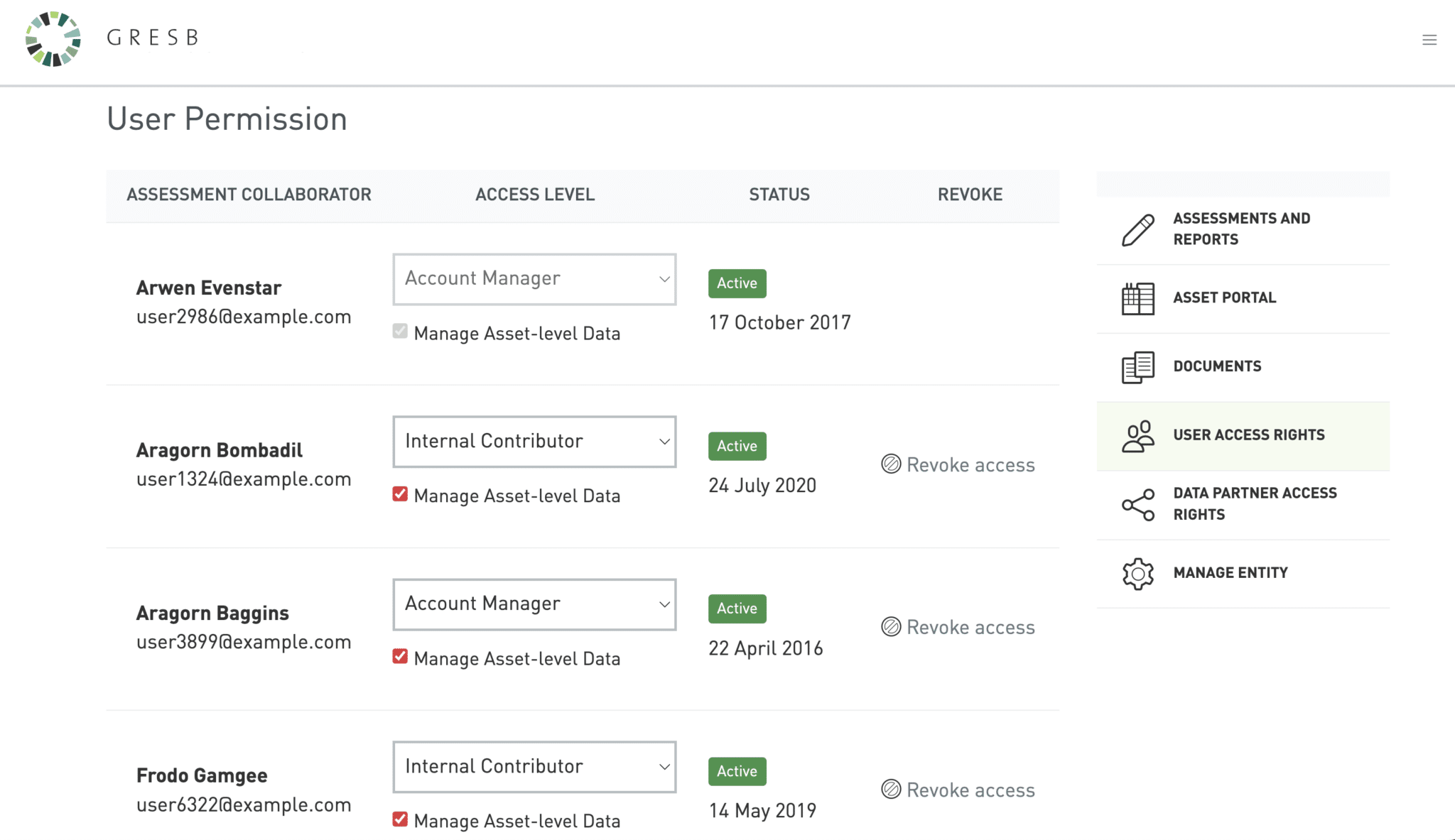
You will then see the users of the entity.

If you’re an Account Manager for the entity, you can change the access levels for other users, add users, and remove users.
Adding Users
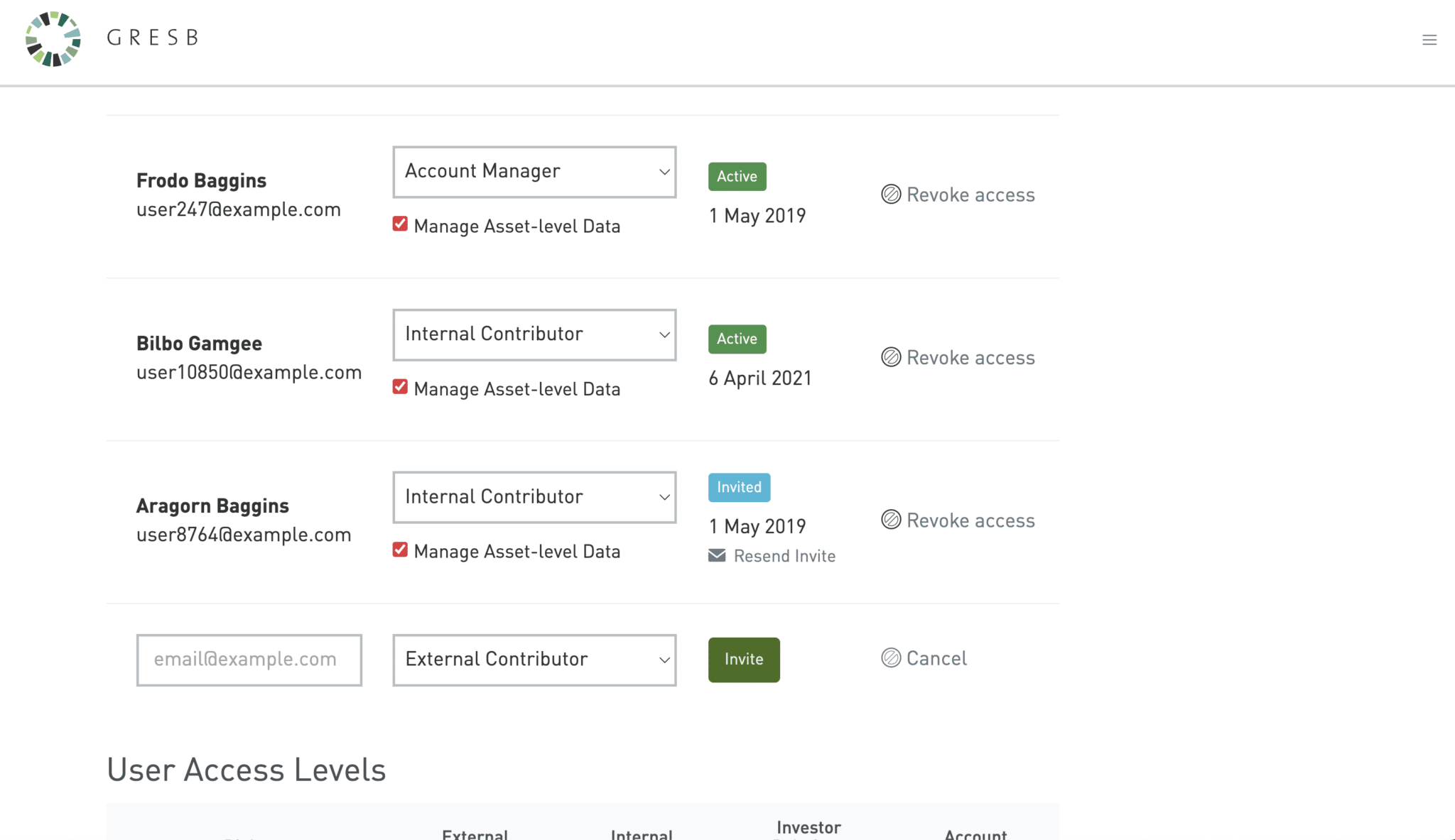
Within the list of users is an ‘Invite’ button. Click on this to start adding a new user.
You can enter the email address of the person you want to add and set their access level.

If the user has not yet set up an account on the GRESB Portal, they must do so first. Once they’ve activated their account, they can access your entity.
Removing Users
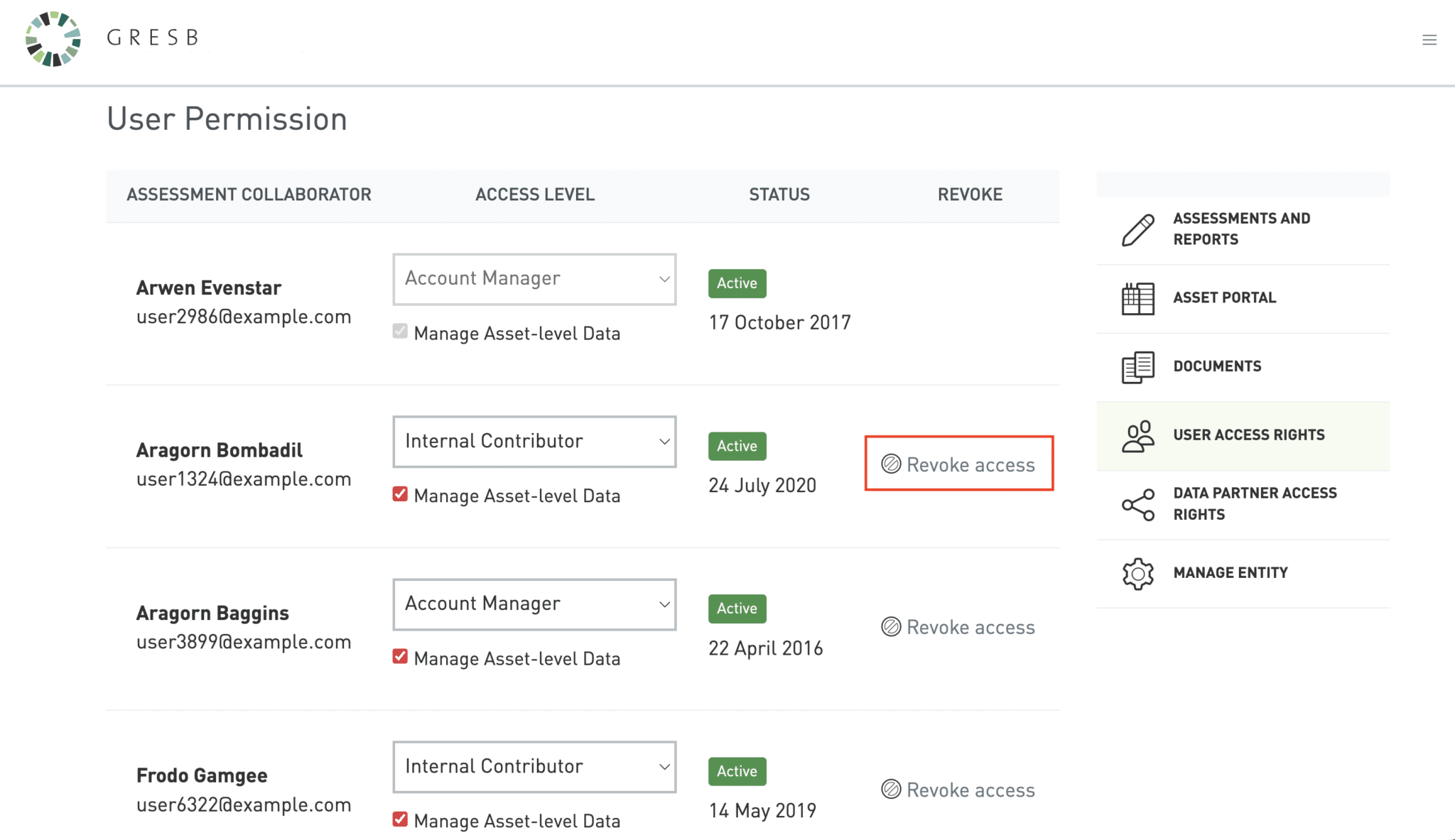
A user can be removed from a particular entity by clicking ‘Revoke access,’ highlighted in the screenshot below.

Changing Access Levels
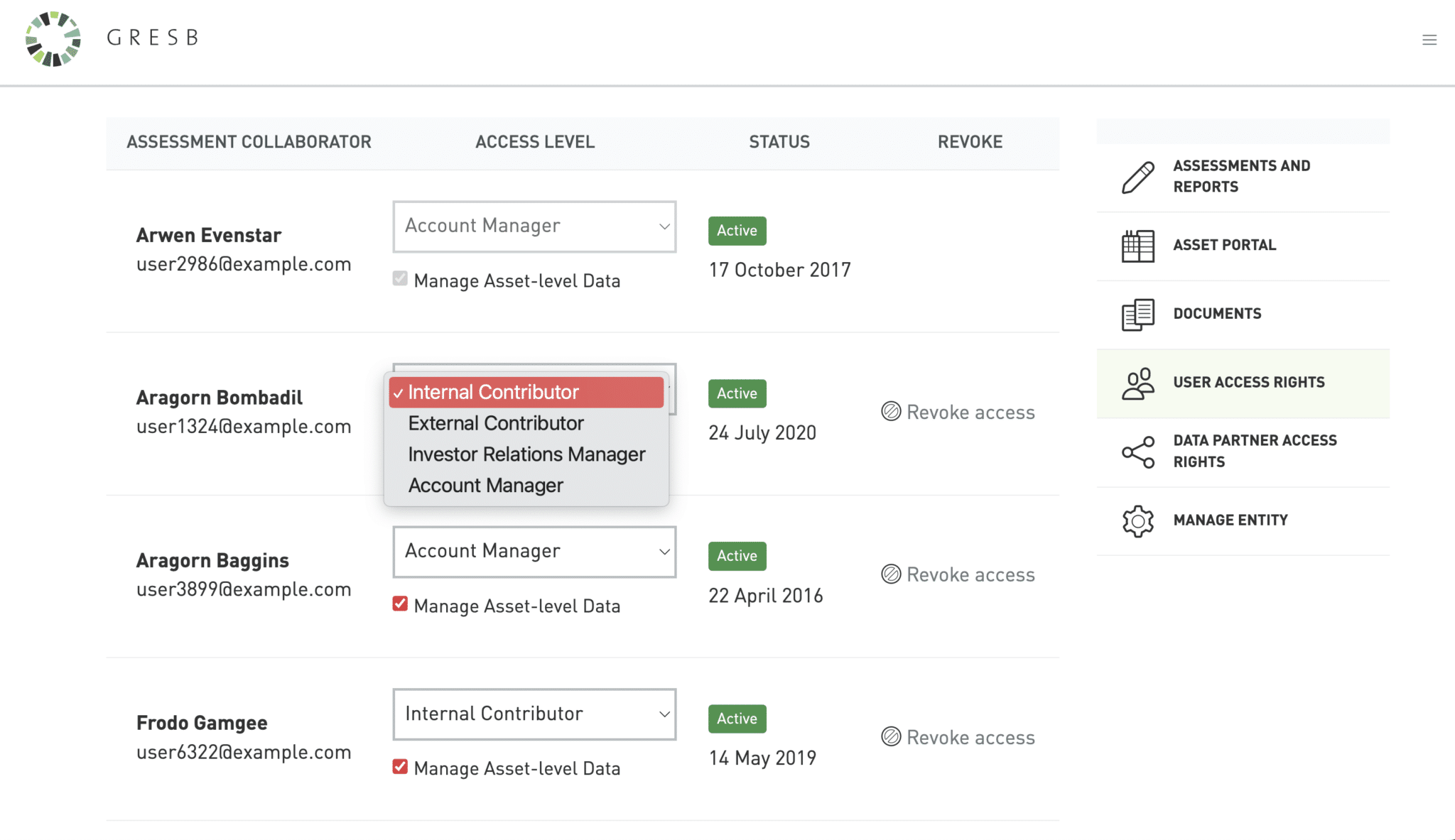
The user's access level can be selected from the dropdown menu, as shown in the screenshot below. For more details on each access level, see the "User Access Rights" section below.
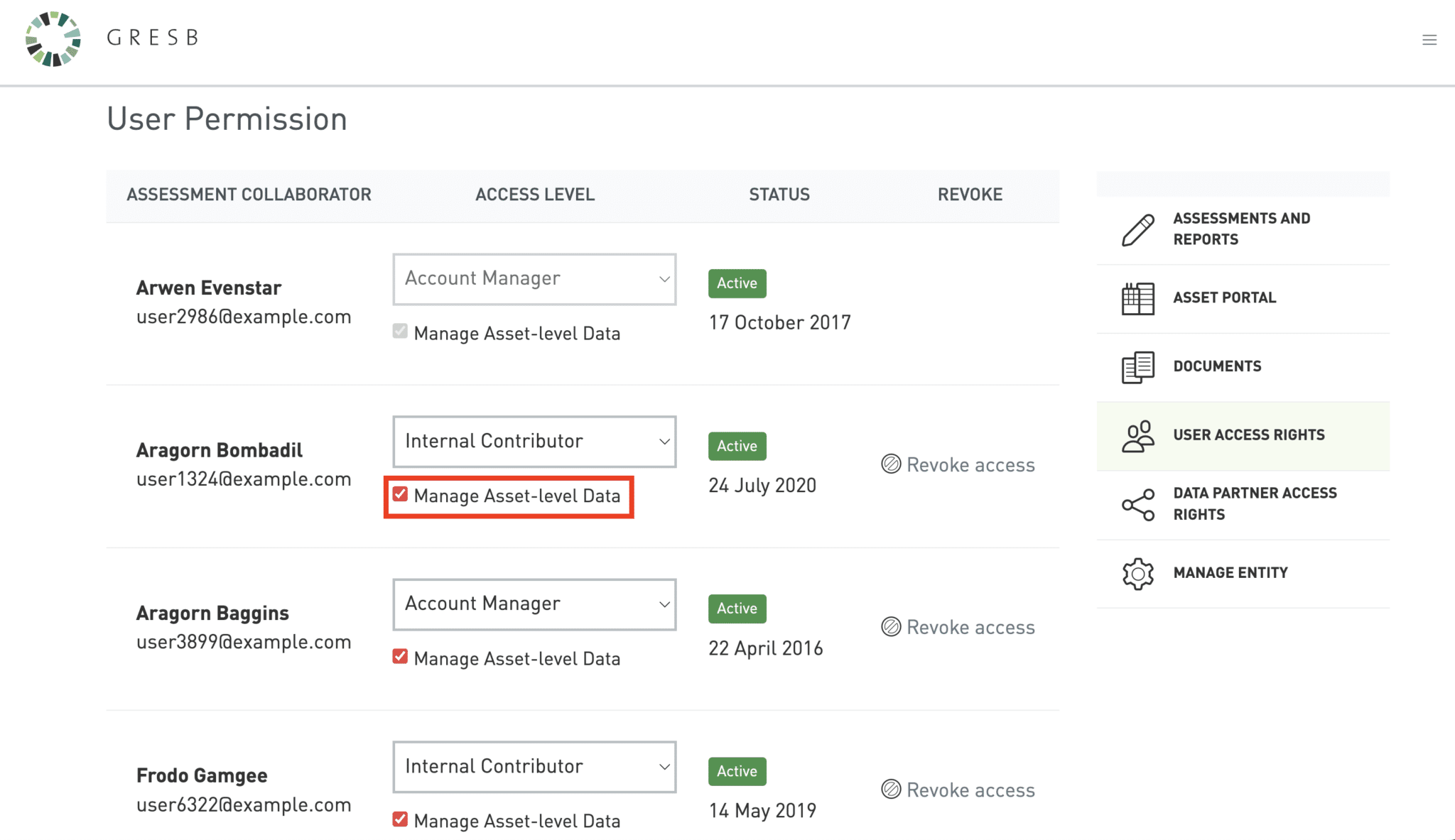
You can also separately indicate whether a user should be able to amend asset-level data, as shown in the screenshot below.
User Access Rights

Assessment Response
Start the Assessment
Participants can begin their GRESB Assessment(s) on April 1st.
After providing the "Intent to Submit" and selecting data sharing settings, the entity will be able to begin filling out the assessment.
Editing the Response
Constituents should review each Public Disclosure indicator in-depth to assess whether the data collected by the GRESB team is accurate, up-to-date, and complete.
If a hyperlink refers to an inaccurate data source, select the discard bin in the evidence field to dissociate the hyperlink from the indicator.
While reviewing the indicators, please note the following:
GRESB collects data from Annual Reports, CSR/Sustainability Reports, Integrated Reports, and corporate websites, using a presence/absence approach. For the purpose of determining the Public Disclosure level, GRESB does not judge the quality of the information disclosed, nor the sustainability performance of the organization, only the level of disclosure. Constituents are advised to provide any missing information.
All pre-filled data for newly added constituents to the universe was collected by GRESB from February 1st to April 1st, 2026. For recurring constituents, the pre-filled data represents the latest updated data - either initially collected by GRESB or the latest reviewed data by the constituent. More recent data might therefore become available during the reporting period. Constituents are advised to update this data so that it reflects their most recent sustainability disclosures.
Constituents are advised to update and check any hyperlinks that might have become unresponsive or that contain potential errors.
Every indicator is identified by a short title (e.g., Sustainability Report) and a code (e.g., D1).
All indicators include a primary question that can be answered with ‘Yes,’ ‘No,’ or 'Not Applicable,' except for indicators in the Performance Component that are responded to with asset-level data and must be reported through the Asset Portal.
When selecting ‘Yes’, participants are required to provide further information by selecting one or more options.
When selecting ‘No’ or 'Not Applicable,' participants may not select any additional sub‑options.
Participants should select all options that accurately describe the organizational activities.
Response types for each indicator may use one or more of the following elements:
'Yes' or 'No' radio buttons
Some indicators have additional mutually exclusive radio buttons. In all cases participants must select the one that is the most applicable.
Checkboxes
Most indicators contain a set of checkboxes that participants can select after answering ‘Yes’ to the overall indicator question. Participants may select multiple sub‑options that apply to their entity or fund manager.
Open text boxes
GRESB distinguishes between two kinds of open text boxes:
For reporting purposes only. These are displayed in the Benchmark Report but are not validated or scored.
Additional context for the answer provided. These are below the ‘Yes/No’ response and enable the participant to provide general comments that will appear on the Benchmark Report but are not validated or scored.
Review & Submit
The 'Review & Submit' button only appears once the assessment is at least 80% complete.
Before proceeding, ensure the response is complete. The Contents overview flags missing information.
Before an entity can submit its assessment, it needs to be linked to a participant member account. If you are uncertain whether the entity is linked, contact the GRESB Helpdesk.
If there are pending errors in the Asset Portal, these must be resolved before submitting.
A confirmation email will be sent to account manager users after submission.
Complete the Real Estate Assessment
GRESB analyzes and scores the GRESB Public Disclosure information separately from the GRESB Real Estate Assessment, resulting in a Public Disclosure Level. All listed property companies are encouraged to participate in the GRESB Real Estate Assessment.
Please see here for guidance on completing this Assessment.
Frequently Asked Questions
Where can I find my Fund ID?
The Fund ID is the first number that appears in the URL after "entities/" when you click on any of your entities in the GRESB Portal.

Users can also export fund IDs from within the Data Exporter tool. Users can access the Data Exporter via the GRESB Portal under the menu “Data Exports.” Any downloads from the Data Exporter have Fund ID as the third column.
What process does GRESB recommend to transfer an existing fund from one manager to another manager?
Participants have two options to transfer an existing reporting entity from one manager to another.
Option 1: The manager that has historically reported to GRESB could essentially 'hand its keys' to the new manager. The acquiring manager would oversee the existing entity's account. In this case, please contact the GRESB Helpdesk to support legal/administrative considerations.
Benefits
The reporting burden is minimal. Pre-filling, participation records, and asset-level data will all be maintained in the Portal. The new manager wouldn't need to start anything from scratch.
Potential Limitations
Privacy risks. If you proceed with option 1, the previous owner would need to understand that the new manager will have access to everything in the Portal associated with the reporting entity. That includes a record of ALS imports, pre-submission check comments, evidence uploads, asset data, etc.
The investor members linked to the account would also maintain access unless the new fund revokes it.
Option 2: Create a new reporting entity.
Benefits
None of the privacy concerns outlined above apply.
Potential Limitations
The reporting burden is higher. The new manager could obtain an export of the entity's current Asset Portal data from the previous manager to reduce some of the effort required to populate asset-level data from scratch. Otherwise, the new manager would need to complete a new assessment.
Participation history would not be visible; the Benchmark Report will essentially look like the entity is a first-year participant. But, given it technically isn't a first-year participant, the entity couldn't use the Grace Period.
Last updated
Was this helpful?